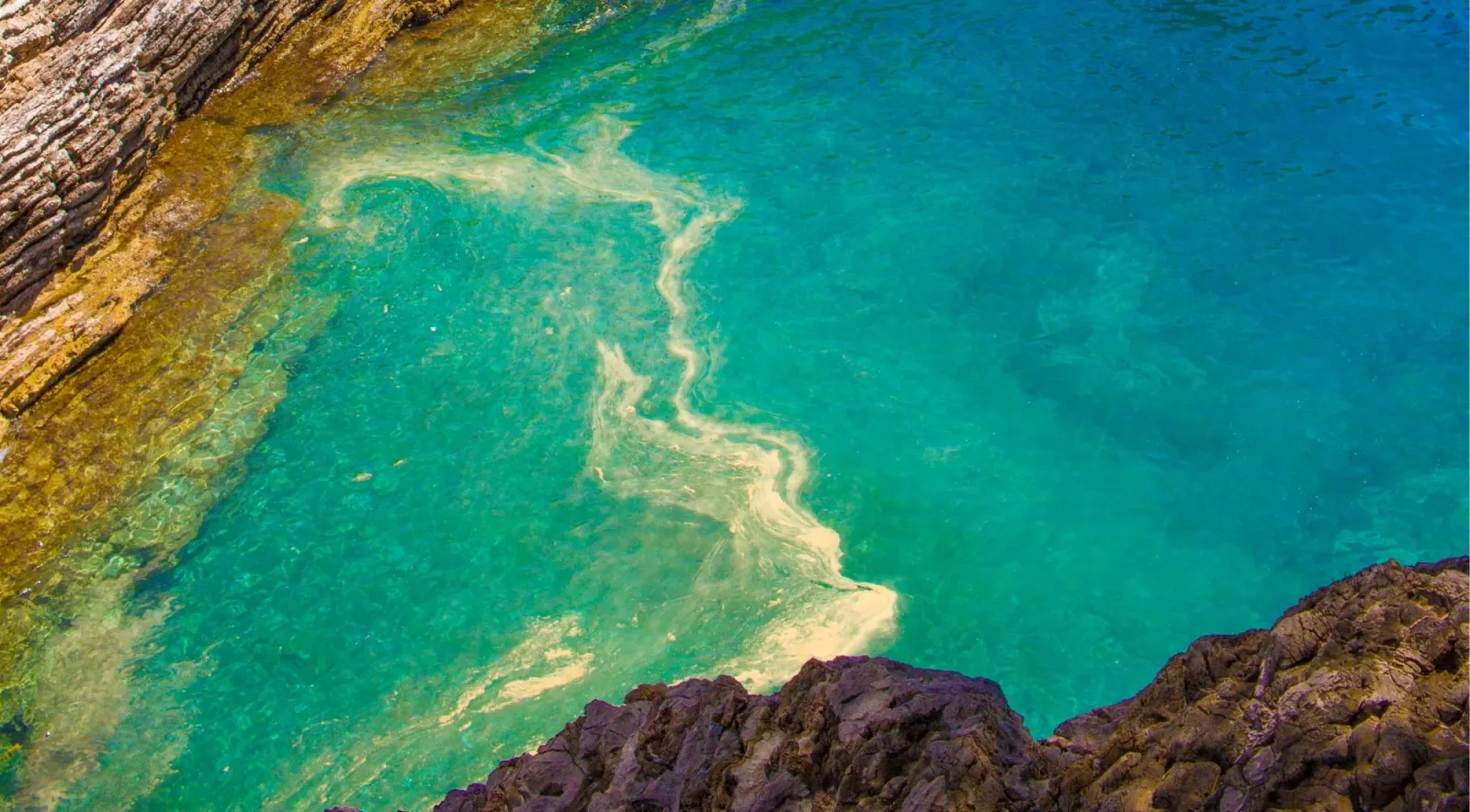
Clear turquoise water off the Luštica peninsula near the Blue Cave, Montenegro, on a calm sunny day
Kotor & the Blue Cave · When to go · Updated September 16, 2026

Best Time for a Blue Cave Tour from Kotor: Month, Sea Conditions & Time of Day

June offers the best overall balance for a first Blue Cave tour from Kotor, with warm enough water for swimming, generally settled weather and fewer peak-summer crowds than July and August. July and August have the warmest sea, while May is quieter but cooler for swimming.

This guide compares the main boat-tour season, the best months for swimming and the conditions that affect the cave. It also explains the 2026 ban on motorboats entering the Blue Cave and lets you check the wind, waves and weather for your exact date.

The Short Answer

The main Blue Cave tour season runs roughly from May to October, although exact start and finish dates vary by operator. Some tours begin in April or continue into November, while winter departures are much more limited and often private or arranged on request.

Since May 2026, motorboats have been banned from entering the cave. Tours can still approach the cave, and on trips that include swimming, passengers may swim in when conditions allow. Swimming is now the usual way for tour passengers to see inside, so warm water and a calm sea matter more than they used to.

If your dates are flexible, June is the best overall month for a first trip. The sea averages around 23°C and is usually calm, days are warm without the strongest midsummer heat, and summer boat schedules are fully underway. July and August are better if the warmest possible water matters most, while September still has warm sea temperatures, though rough seas become more common as the month goes on.

May is a quieter shoulder-season option in Kotor, but the sea is closer to 19°C. October can also work, though weather becomes less reliable and regular departures begin to thin out.

Whatever month you choose, book a morning departure if possible. Sea conditions are often calmer and there are usually fewer boats around the cave. The strongest blue light tends to appear from mid-morning toward midday on clear days, depending on the sun angle. Depending on wind and sea conditions, tours may be cancelled or rerouted and swim stops may be skipped.

Best overall
June
Warmest sea
July–August
Warm sea + milder weather
September
Quieter shoulder season
May
Main regular tour season
Roughly May–October
November–April
Limited; often private or on request
Best departure
Morning
Best light
Mid-morning to around midday
Most useful live checks
Wind · gusts · wave height · cloud
  • May–OctMain tour season, varies by operator
  • 23°CSea in June, average
  • 26°CSea in August, average
  • 32°CAugust average high
Check Blue Cave Tour Dates From $51 per person · ★ 4.7 from 4,838 reviews · 3–3.5 hours
Live dates and prices

Check Dates for the Blue Cave Tour from Kotor

A well-reviewed three-hour tour from Park Slobode: Our Lady of the Rocks, a former submarine tunnel, Mamula and a swim stop at the Blue Cave when conditions allow. The calendar shows what is actually available on your date.

Pоwered by GetYourGuide
Your date

Check the Sea and Sun for Your Date

Pick a day. For the next two weeks the card shows the forecast wind, waves, cloud and rain over the tour hours; further ahead it shows the usual conditions for that month.

Monthly averages
  • Tour season: regular departures run roughly from May to October; from November to April they are limited and often private or on request.
  • Sea at the cave: waves of 1 m or more are rare in June and common from November to April.
  • Sun at the cave: the blue light is usually strongest from mid-morning toward midday on a clear day, so heavy cloud means a dimmer cave.
28°CAverage high, June
71 mmRain in an average June
23°CSea, June average

June is the calmest and one of the warmest months for the swim. Pick your date to see its forecast or its usual conditions.

Averages from Herceg Novi, at the mouth of the bay, with satellite sea temperatures and a wave model. Not a forecast.

Around the bay

Other Experiences You Might Enjoy

A day around the Blue Cave pairs well with the rest of the Bay of Kotor: the island church of Our Lady of the Rocks and baroque Perast, the walls above Kotor Old Town, the fortress island of Mamula, or a day trip to Budva and Lovćen National Park. See our guide to things to do in Kotor for more.

Through the year

What Each Season Is Like for a Blue Cave Trip

June: warm water and a calm sea

By June the sea off the Luštica coast has warmed to about 23°C, which most people find comfortable for a half-hour swim. In the wave model we checked, waves of 1 m or more reached the cave on fewer than 2% of June days, the lowest share of any month. Average highs are around 28°C, and rain falls on about five days in an average June. The town is busy but not yet at its peak: Kotor’s hotels had about 16,800 arrivals in June 2025, against 19,300 in August.

July and August: the warmest sea and the hottest days

The sea is at its warmest, about 25°C in July and 26°C in August, and July is the driest month of the year. The trade-off is heat on an open boat, with average highs above 31°C in July and about 32°C in August, and the busiest weeks in town. Summer brings a northwesterly breeze on many afternoons, but rough seas at the cave are still uncommon. Take the first departure you can, bring a hat and plenty of water, and book a few days ahead.

September: warm water, milder afternoons

The sea holds much of its summer warmth, at about 24°C, while average highs drop to about 27°C. Rain and rough seas become more common as the month goes on: rain falls on about seven days in an average September against five in June, and waves reached 1 m on about one September day in seven in the wave model. September is still busy in Kotor, with many cruise ship calls.

May and October: quieter, with a cooler sea

May is noticeably quieter in Kotor than the summer months, and regular departures have started, but the sea is only about 19°C, which many people find bracing. October keeps the sea at about 21°C and brings more rain and rough days; the town’s hotels are quieter than in September, although the port stays busy with cruise ships. Departures often thin out toward the end of the season, so check your date.

November to April: private trips only

Departures are much more limited in these months, and many are private, arranged on request or dependent on the weather. Some tours start in April or continue into November. The sea is about 14 to 16°C, rain is frequent, and waves of 1 m or more are common, especially in November. A winter trip is for the scenery of the bay and a quiet Kotor rather than for swimming.

Compare the months

Blue Cave Conditions Month by Month

Long-term averages for the sea by the cave and the weather at the mouth of the Bay of Kotor. They describe a typical month, not your trip.

MonthRegular toursSeaDays a month with waves of 1 m+Average highDays with rainDaylight (mid-month)
JanuaryLimited14°C913°C119h 24m
FebruaryLimited14°C814°C1010h 34m
MarchLimited14°C916°C1011h 53m
AprilSome tours15°C719°C1013h 21m
MayMain season19°C424°C814h 35m
JuneMain season23°Cunder 128°C515h 16m
JulyMain season25°C231°C315h 00m
AugustMain season26°C132°C413h 56m
SeptemberMain season24°C427°C712h 32m
OctoberMain season21°C522°C911h 07m
NovemberSome tours19°C1218°C119h 48m
DecemberLimited16°C814°C129h 06m

“Days with rain” counts days with at least 1 mm. The wave column is a model average of the highest wave each day, 2022 to 2025, not a count of cancelled tours.

New in 2026

How the Blue Cave Swim Works Now

Since May 2026, motorboats have been banned from entering the Blue Cave. Montenegro’s Ministry of Maritime Affairs announced the rule that month, and only craft without engines, such as kayaks, may go inside. Tours can still approach the cave, and on trips that include swimming, passengers may swim in when conditions allow. How that works on the day, including where the boat stops, depends on the boat and the sea.

This makes the sea on the day matter more than it used to. A swim in open water is only comfortable when the waves are small, and the cave faces the open Adriatic on the Luštica coast rather than the sheltered inner bay. It also makes water temperature part of the choice of month: a swim in 19°C water in May is a different experience from one in 25°C water in July.

If you would rather not swim, most Blue Cave tours from Kotor also take in the bay itself, and many include Our Lady of the Rocks, where the church museum usually charges a small cash entry fee that is not included in the tour price.

On the day

Wind, Waves and Cancellations

The inner Bay of Kotor is sheltered, and the part of the tour most affected by the weather is the run past the bay’s mouth to the Blue Cave. Depending on wind and sea conditions, tours may be cancelled or rerouted and swim stops may be skipped. There is no single wind or wave limit that every boat uses: each skipper makes the call for their own boat and group, and some tours swim at another spot when the cave is out of reach.

Rough days follow a clear seasonal pattern. In the wave model we checked, waves of 1 m or more were rare from June to August, appeared on roughly one day in eight in May and one in seven in September, and were common from November to April, peaking in November at more than a third of days. In the colder half of the year, the coast gets the jugo, a humid southeasterly wind, and the bura, a cold, dry wind from the northeast. In summer, a northwesterly breeze is more common.

Two practical rules follow. Book the tour for the first day or two of your stay, not the last, so a cancelled tour can be moved to another day; bookings through GetYourGuide can be cancelled for a full refund up to 24 hours before. And check the wind, gusts and wave height a few days ahead, as the date checker above does, since a calm month still has rough days.

Morning or afternoon?

Best Time of Day for the Blue Cave

The cave gets its color from sunlight entering the chamber and reflecting off the water and the pale floor. The strongest blue light tends to appear from mid-morning toward midday on clear days, depending on the sun angle, and published advice varies: the Herceg Novi tourist organization says the effect is best on sunny days, especially before noon, while other guides suggest about 11am to 2pm. A cloudy sky dims the cave at any hour.

For practical reasons, a morning departure is usually the better booking. Sea conditions are often calmer, there are usually fewer boats around the cave, and in July and August the boat is cooler, which matters on a three-hour trip with little shade. A late-morning boat can reach the cave closer to midday, when the light is often strongest.

Morning departures are popular, so book them a few days ahead in summer. Later tours still reach the cave, usually in softer light and sometimes in choppier water.

Crowds

How Busy Is Kotor Each Month?

Two published series give a good guide to how busy the town is. Kotor’s hotels recorded about 19,300 arrivals in August 2025 and 19,000 in July, against 16,800 in June, 15,500 in September and 13,800 in May. October and April were under half of August, and the winter months were a small fraction of it. The Port of Kotor’s 2026 schedule lists 100 cruise ship calls in August, 94 in July, 91 in September, 80 in June, 72 in October and 60 in May.

Both put the peak in July and August. They disagree on October, when hotels are much quieter but cruise ships still call often, so on a ship day the Old Town can feel busy. May is quieter than June on both counts.

Neither series counts the people on your boat or at the cave. Hotel figures leave out private apartments, day visitors and cruise passengers, and the port schedule lists ships, not passengers. Read them as a guide to how busy Kotor is, not as a headcount at the Blue Cave, which sits outside the bay on the Luštica coast.

Match the tour to your dates

Which Tour Fits Your Dates?

June to September, on a calm day

Blue Cave Swim, Our Lady of the Rocks & Submarine Tunnels

A well-reviewed group tour with a swim stop at the Blue Cave when the sea allows. Best when the water is warm and the forecast is calm; take a morning departure.

From $51 per person · ★ 4.7 from 4,838 reviews · 3–3.5 hours

Check Dates
May, October, or a windy forecast

Relaxing 3-Hour Tour to Our Lady of the Rocks & Perast

Stays in the sheltered inner bay and skips the open-sea run to the cave. A good fit when the water is too cool for a long swim or the forecast is rough.

From $46 per person · ★ 4.7 from 305 reviews · 3 hours

Check Dates

Prices and review counts were checked on GetYourGuide on September 16, 2026. Prices change with the date you choose; the booking page shows the current one.

Festivals

Festivals and Events in Kotor and Perast

Worth knowing when you pick your dates. Several events change date each year, so check the current program before you book around one.

WhenEventWhere
February 3Feast of St. Tryphon, the patron saint’s day, with the Boka Navy’s kolo dance on a nearby SundayKotor
FebruaryKotor Winter Carnival, a centuries-old masked carnival (dates change each year)Kotor
FebruaryMimosa Festival (dates change each year)Herceg Novi
Late MarchCamellia festival day in Stoliv (a single day; March 29 in 2026)Stoliv
JuneInternational Klapa Festival, Adriatic a cappella singing (June 19–21 in 2026)Perast
July–AugustKotorArt, music and theater in the Old Town (July 13–August 16 in 2026)Kotor
July 22Fašinada, the evening boat procession to Our Lady of the RocksPerast
Late July–early AugustKotor Summer Carnival (July 30–August 1 in 2026)Kotor
Second-to-last Saturday in AugustBoka Night, a parade of decorated boats with fireworks (August 22 in 2026)Kotor
December–JanuaryKotor Winter Fest, music in the Old Town squares (planned for December 1, 2026 to February 1, 2027)Kotor

Boka Night and Fašinada put many boats on the bay in the evening, so expect a busier waterfront. Other seasonal notes: Kotor’s city walls charge an entry fee from March to November, the Kotor–Lovćen cable car opened in May 2026 and has not yet published a winter schedule, and Tivat Airport has far fewer routes in winter, when many visitors fly into Podgorica or Dubrovnik instead.

Sources

How We Know

Weather. Montenegro’s national weather service (ZHMS) publishes no climate normals for Kotor or Tivat. Temperatures, rainfall and rain days come from the 1991–2020 normals for the Herceg Novi weather station (WMO 13455), which ZHMS supplied to the World Meteorological Organization and NOAA archives. Herceg Novi sits at the mouth of the same bay, about 10 km from the Blue Cave. We cross-checked against the ERA5 reanalysis, which runs about 2°C cooler on summer highs, and did not publish it.

Sea. Sea temperatures are NOAA OISST 1991–2020 monthly averages for the satellite grid cell off Luštica. Wave figures are our own averages of the Open-Meteo marine model’s daily highest wave, 2022–2025, at the same point. Daylight is computed for Kotor on the 15th of each month.

Tours and the cave. The season is a summary of Kotor operators’ own websites and published visitor guides, checked on September 16, 2026: most run a regular season from roughly May to October, some start in April or continue into November, and winter trips are limited, often private or on request. The cave rule comes from the Ministry of Maritime Affairs’ announcement, reported by RTCG on May 25, 2026. The time-of-day advice comes from the Herceg Novi tourist organization and published visitor guides. Prices, ratings and review counts come from GetYourGuide on September 16, 2026.

Crowds. Hotel arrivals are MONSTAT’s monthly series for Kotor municipality (2025). Cruise calls are counted from the Port of Kotor’s 2026 schedule file. Festival dates come from the Municipality of Kotor’s 2026 events program and local reports.

What these numbers cannot tell you

  • Climate normals are 30-year averages, not a forecast for your trip, and Herceg Novi is not Kotor: the old town sits deeper in the bay under steep mountains.
  • The wave figures come from a model, not from buoys, and they do not count cancelled tours. None of the operators we checked publishes a cancellation rate or a single wind or wave limit that all boats use.
  • Hotel arrivals are a proxy for how busy Kotor is. They do not count private apartments, day visitors or cruise passengers, and nothing here measures how many people are at the cave.
  • Operators publish different seasons, and not all publish one. The booking calendar on this page shows what is actually available for your date.
  • The booking calendar lets you pick almost any date; that is not proof a shared boat is running on it, especially from November to April.
  • We do not have per-date prices, so this page does not name a cheapest month.
Common questions

Blue Cave Timing FAQ

What is the best month for a Blue Cave tour from Kotor?
If your dates are flexible, June is the best overall month for a first trip. The sea averages around 23°C, days are warm without the strongest midsummer heat, and summer boat schedules are fully underway. July and August have the warmest water, September still has a warm sea with milder afternoons, and May is quieter in Kotor but the sea is cooler.
Can you still swim at the Blue Cave in Montenegro?
Yes, on tours that include a swim stop and when conditions allow. Since May 2026, motorboats have been banned from entering the cave, so tours approach the cave rather than driving inside, and passengers may swim into the cave when the sea is calm enough. Life jackets are usually provided, and the swim is optional.
Do Blue Cave tours from Kotor run in winter?
Departures are much more limited from November to April, and many are private, arranged on request or dependent on the weather. The regular tour season runs roughly from May to October, with some tours starting in April or continuing into November. The sea is about 14 to 16°C in winter, so a winter trip is mostly about the scenery of the bay.
What is the best time of day to visit the Blue Cave?
A morning departure is usually the best choice, because the sea is often calmer and there are usually fewer boats around the cave. The strongest blue light tends to appear from mid-morning toward midday on clear days, depending on the sun angle, and published advice ranges from about 9am–noon to 11am–2pm.
How warm is the sea at the Blue Cave?
About 19°C in May, 23°C in June, 25°C in July, 26°C in August, 24°C in September and 21°C in October, as long-term averages. The sea is at its coolest, about 14°C, in February and March.
What happens if the sea is too rough for the Blue Cave?
Depending on wind and sea conditions, tours may be cancelled or rerouted and swim stops may be skipped. There is no single wind or wave limit that every boat uses, so each skipper makes the call for their own boat. Bookings through GetYourGuide can be cancelled for a full refund up to 24 hours before the tour.
When is Kotor busiest?
July and August. Hotel arrivals in Kotor peaked in August 2025, and the port’s 2026 schedule has the most cruise ship calls in August, July and September. Both are a guide to how busy the town is, not a count of people on the boats or at the cave.
Ready to book?

Book Your Blue Cave Tour from Kotor

Pick a morning departure early in your stay, and check the wind and waves a few days before you go.

  • ★ 4.7 / 5 from 4,838 reviews
  • Our Lady of the Rocks, submarine tunnel, Mamula and the Blue Cave swim
  • Free cancellation up to 24 hours before
Check Availability

We may earn a commission if you book through links on this page, at no extra cost to you. This does not affect our recommendations.